Theme Layout

Boxed or Wide or Framed

[style4]

Theme Translation

Display Featured Slider

No

Featured Slider Styles

Display Grid Slider

Grid Slider Styles

Display Author Bio

Display Instagram Footer

Dark or Light Style

Search This Blog

Blog Archive

Followers

Popular Posts

Pages

Showing posts with label Franklin expedition. Show all posts
Arctic adventurers recreate trek to Rae Strait

Arctic adventurers recreate trek to Rae Strait


The Arctic Return Expedition is all systems go. A reconfigured four-man team will set out March 25, 2019 to recreate the most successful Arctic overland expedition of the 19th century. On his 1854 surveying adventure, accompanied by an Inuk and an Ojibway, Orcadian explorer John Rae discovered both the terrible fate of the lost Franklin expedition and the final link in the first navigable Northwest Passage.
Next March, veteran polar adventurer David Reid will lead an outstanding team in traveling 650 km overland from Naujaat (Repulse Bay) to Rae Strait, following in the footsteps of John Rae, William Ouligbuck Jr., and Thomas Mistegan. When personal considerations forced withdrawals, Reid rounded out his team with experienced, highly skilled adventurers.
The party now includes:
 n  Canadian adventurer Frank Wolf, named one of Canada’s top 100 explorers by Canadian Geographic Magazine in 2015. Wolf, the first to canoe across Canada in a single season, also cycled 2,000 km in winter on the Yukon River from Dawson to Nome. He has documented his adventurers in articles and films and recently published his first book, Lines on a Map (Rocky Mountain Books).
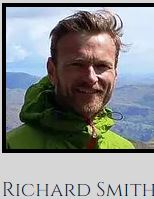
  n  Scottish adventurer Richard Smith, PhD, who studied as an astrophysicist, moved into Information Technology, and served with the Royal Marine Commandos and the Special Boat Service. Smith has climbed, trekked or kayaked in Alaska, Greenland, Nepal and the French Alps, and explored the jungles of Belize and the deserts of Oman.
  n  Adventure film-maker Garry Tutte, who created an educational web-series from Mt. Everest, documented a 7000 km car rally from England to Gambia across the Sahara Desert, and travelled from the remote islands of the Philippines to Hong Kong to create an award-winning film. In 2017, Tutte led the media team aboard the Canada C3 expedition as it circumnavigated the country’s 23,000 km coastline from Toronto to Victoria via the Northwest Passage.
  n  Reid himself, who lived on Baffin Island for 20 years and has led, organized or participated in more than 300 Arctic and Antarctic expeditions, trips and projects. In that time he has traveled thousands of miles by dog sled, ski, snowmobile, boat, kayak, ship, foot and most recently by bike, becoming the first person to cross Baffin Island by fat-tire bike.
The expedition is hoping to raise funds for the restoration of John Rae's birthplace, the Hall of Clestrain. The flagship sponsor is The Royal Institution of Chartered Surveyors (RICS). The award-winning travel company Adventure Canada and Canada Goose are also lending major support. For more details check out the expedition website.


Read more »
Ken McGoogan
0 Comments
MYSTERY SOLVED!!! Polar Bears explain Fate Of the Franklin Expedition

MYSTERY SOLVED!!! Polar Bears explain Fate Of the Franklin Expedition


Ken McGoogan in Arctic.


Polar Bears Explain the Fate of the Franklin Expedition

What happened to the Franklin Expedition? Researchers have been debating that since 1847, two years after Sir John Franklin disappeared into the Arctic with 128 men. From the note later found at Victory Point on King William Island, most people believe that in April 1848, 105 men left the two ice-locked ships. The note tells us that already, nine officers and fifteen seamen had died. That represents 37 per cent of officers and 14 per cent of crew members. Historians have scratched their heads: why such disproportionate numbers?
Researchers have spent vast amounts of time and energy inquiring into the deaths of the first three sailors to die, whose graves remain on Beechey Island. Did lead poisoning kill them? Botulism? Zinc deficiency leading to tuberculosis? But wait. Maybe those three early deaths were anomalies – exceptions that tell us nothing about subsequent events. Perhaps the other twenty-one dead -- nine officers, twelve sailors -- died because of some event, some accident or injury.
A few scientists have wondered if these twenty-one men ingested something that others did not. But nobody, to my knowledge, has publicly invoked the calamitous Danish-Norwegian expedition of the early 1600s, which lost sixty-two men out of sixty-five. In 1619-20, while seeking the Northwest Passage, the explorer Jens Munk led two ships filled with sailors into wintering at present-day Churchill, Manitoba.
In my book Dead Reckoning, drawing on Munk’s journal, I detail the unprecedented miseries that ensued. During my research, I had turned up an article by Delbert Young published decades ago in the Beaver magazine (“Killer on the ‘Unicorn,’" Winter, 1973). It blamed the catastrophe on poorly cooked or raw polar-bear meat.
Soon after reaching Churchill in September 1619, Munk reported that at every high tide, white beluga whales entered the estuary of the river. His men caught one and dragged it ashore. Next day, a “large white bear” turned up to feed on the whale. Munk shot and killed it. His men relished the bear meat. Munk had ordered the cook “just to boil it slightly, and then to keep it in vinegar for a night.” But he had the meat for his own table roasted, and wrote that “it was of good taste and did not disagree with us.”
As Delbert Young observes, Churchill sits at the heart of polar bear country. Probably, after that first occasion, the sailors consumed more polar-bear meat and Munk did not think to mention it. During his long career, he had seen men die of scurvy and knew how to treat that disease. He noted that it attacked some of his sailors, loosening their teeth and bruising their skin. But when men began to die in great numbers, he was baffled. This went far beyond anything he had seen. His chief cook died early in January, and from then on “violent sickness . . . prevailed more and more.”
After a wide-ranging analysis, Young points to trichinosis as the probable killer —a parasitical disease, not fully understood until the twentieth century, which is endemic in polar bears. Infected meat, undercooked, deposits embryo larvae in a person’s stomach. These tiny parasites embed themselves in the intestines. They reproduce, enter the bloodstream and, within weeks, encyst themselves in muscle tissue throughout the body. They cause the terrible symptoms Munk describes and, left untreated, can culminate in death four to six weeks after ingestion.
So, back to the Franklin expedition. Could trichinosis, induced by eating raw polar-bear meat, have killed those nine officers and dozen seamen? And galvanized the remaining men into abandoning the ships? And rendered many of them so sick that they could hardly think straight or walk. And made some of them so horribly sick that they had to be quarantined into a separate tent?
In recent years, while visiting Beechey Island with Adventure Canada, more than once my fellow voyagers and I have been driven off by polar bears. We retreat into the zodiacs at first sign of approach. In that same situation, spotting a polar bear, how would Franklin’s men have responded? They would have killed those bears and eaten them -- perhaps bringing some of the meat onto the ships. That undercooked polar-bear meat, unevenly distributed among officers and crew, might well have led to the lopsided fatality statistics . . . and to all the rest. So, anyway, I suggest in Dead Reckoning.
When I put forward this theory to online-friends, some balked. By the time Franklin sailed, they observed, in the mid-19th century, Royal Navy officers knew that bear meat could wreak havoc in the human body, even if they did not fully understand exactly how. This is undoubtedly true. But then a supportive contributor drew attention to a contemporary video broadcast in which an expert hunter describes how he and his companions got horribly sick after eating poorly cooked bear meat. On an episode of Meat Eater, Steven Rinella admits to feeling mortified: “I have been preaching about the importance of cooking bear meat to my viewers and readers for a decade now,” he says, “and it’s really embarrassing.”
Rinelli knew very well that bear meat could be dangerous. But he went ahead and ate it anyway. Can anyone doubt that the men of the Franklin expedition, subsisting on short rations, desperate for a change of diet, would have made the same decision? Within the next few years, Parks Canada will almost certainly turn up some decisive evidence -- written records or human remains or both -- as divers investigate the Erebus and Terror. Until then, my money is on polar-bear-meat-induced trichinosis.
This essay turns up on a wonderful website devoted to Canadian mysteries. Check it out at The Franklin Mystery: Life and Death in the Arctic.

Read more »
Ken McGoogan
0 Comments
John Rae Festival turns up a Franklin sailor and a tribute in stained glass

John Rae Festival turns up a Franklin sailor and a tribute in stained glass


Arctic aficionados should check out this excellent bit of work from the Orkney News about the John Rae Festival. Most are aware that a gorgeous reclining memorial statue to explorer John Rae is one of the highlights of any visit to St. Magnus Cathedral in Kirkwall. Here we see it with the witty and perceptive Fran Flett Hollinrake, the world’s leading authority on, and only full-time staffer at, the 12th-century cathedral. Most know, as well, that Rae is buried in the kirkyard behind the cathedral. Fewer know that the graveyard also contains a memorial to Thomas Work, an able seaman who sailed with John Franklin on the Erebus.
He is commemorated on a stone that marks the grave of his widow, Catherine Wishart. And here is another surprise, courtesy of Orcadian historian Tom Muir. Not far from St. Magnus, the Scottish Episcopal Church of St. Olaf contains a stained glass window dedicated to “the beloved memory of my husband Dr. John Rae, the Arctic explorer.” It was installed by his remarkable Canadian wife, Kate Rae.
Read more »
Ken McGoogan
0 Comments
The Terror? Hailing the hell-bent original

The Terror? Hailing the hell-bent original


My review of the original novel turned up in the Globe and Mail a decade ago. In response to popular demand, voila, here it is again . . . 

The Terror: A Novel, by Dan Simmons
Reviewed by Ken McGoogan

The most impressive achievement of this brilliant historical novel is that the author manages to account plausibly for all the known facts. In recreating the harrowing true story of the final expedition of Sir John Franklin, who disappeared into the Arctic with two ships and 128 men in 1845, Dan Simmons offers imaginative solutions to the thorniest mysteries.
After spending a first winter at Beechey Island, why did Franklin leave no note saying where he was sailing? Why did sailors, and especially officers, begin dying in such numbers?  When, in 1847, the men abandoned the two ice-locked ships, the Erebus and the Terror, why did they drag sledges towards the continental mainland and not Fury Beach, where food supplies lay waiting?
The questions get tougher: Why did local Inuit not help the starving, scurvy-stricken white men? How could sailors of the Royal Navy resort to eating the dead bodies of their comrades? How did one final survivor end up sitting in a whaleboat heading back the way it had come. Simmons incorporates oral testimony that some final survivors managed to get back aboard the Terror, and dramatically explains why contemporary searchers have failed to discover any traces of either ship.
Canadian literature is haunted by these questions. Besides such classics as The Arctic Grail by Pierre Berton and Frozen in Time by Owen Beattie and John Geiger, the lost Franklin expedition figures in works by authors as diverse as Margaret Atwood (Strange Things: The Malevolent North in Canadian Literature) and the late Mordecai Richler (Solomon Gursky Was Here). The surprise is that Simmons, a prolific, Colorado-based American who has won several awards for his suspense, horror and science fiction novels, should demonstrate such mastery of this northern file.
And Simmons is more than plausible. He is also dramatic and vivid – at times, horrifically so. He delivers arresting evocations of the cold and the dark and a bloody flogging; and I do not believe I have ever encountered more chilling descriptions of shipboard amputations or of the effects of scurvy, lead-poisoning and botulism. Nor does Simmons neglect the prosaic but enhancing detail. “Each time the survivors spent more than two days at a camp,” he writes, “the bosuns dragged a stick through the gravel and snow in some relatively open, flat spot to create the rough outline of the Erebus’s and Terror’s top and lower deck. This allowed the men to know where to stand during master and gave them a sense of familiarity.”
Not surprisingly, given his experience as a novelist, Simmons opens the narrative in October 1847, when it is well-advanced, and flashes back as necessary. He alternates among several point-of view characters, but most often he draws on Captain Francis Crozier, who in real life was Sir John Franklin’s second-in-command. This enables him seamlessly to contextualize the expedition, as the veteran Crozier can “remember” sailing with Sir Edward Parry and Sir James Clark Ross, and also visiting Franklin when he was lieutenant-governor of Van Diemen’s Land.
Simmons gives one character a diary, and he allows the Irish Crozier to have inherited the gift of second sight, so that on occasion, for example, he can “see” what Lady Franklin is doing back home in London. So far, so safe.  But the author also employs one risky narrative strategy: he adds a mystical or supernatural dimension to the novel by introducing a marauding monster -- a cannibalistic Arctic windigo.
In so doing, he transgresses the conventions of the prevailing psychological realism. As a result, he will draw fire from both literary and historical purists, who will use the white beast as an excuse to dismiss the novel. Aesthetically, however, Simmons makes the device work. 
 First, he indicates that the beast should be read allegorically. He does this by allowing Crozier to realize that “the Devil trying to kill them up here in the Devil’s Kingdom was not just the white-furred thing killing and eating them one by one, but everything here – the unrelenting cold, the squeezing ice, the electrical storms, the canny lack of seals and whales and birds . . . the summers that did not come, the leads that did not open – everything. The monster on the ice was just another manifestation of a Devil that wanted them dead.”
Secondly, Simmons identifies this white beast, also called “The Terror,” as emerging out of Inuit mythology. And in this way, he integrates the Inuit dimension, without which the novel would remain incomplete. Finally, by introducing this inexplicable beast, Simmons implicitly recognizes and asserts that some aspects of what happened on that long-ago expedition must remain forever unknown.
No book is without flaws. Simmons treats explorer Elisha Kent Kane far too harshly, and he serves up one fanciful sex scene that, alas, just never could have happened. Nor did Lady Franklin, as she is properly called, see her husband off at the London docks; and Leopold McClintock did not read the final note at the cairn on King William Island, but only when he arrived back at his ship.
But this is nitpicking. While remaining true to the historical record in every important particular, Simmons has given us a host of colorful, believable characters caught up in a driving, hell-bent narrative.  The Terror is a tour de force. The author’s nationality notwithstanding, this novel is far more deserving of specifically Canadian attention than the majority of the books that, come autumn, we will see short-listed for this country’s most prestigious literary prizes.

Ken McGoogan has written about the lost Franklin expedition in Lady Franklin’s Revenge, which recently earned him the Pierre Berton Award for History and the UBC Medal for Canadian Biography; and in Fatal Passage, which is currently being turned into a two-hour TV docudrama.

Read more »
Ken McGoogan
0 Comments
Beechey Island whiteout inspires Dead Reckoning video

Beechey Island whiteout inspires Dead Reckoning video


Scenes from September, voyaging Out of the Northwest Passage with Adventure Canada.

Day 8: Beechey Island
For visiting Beechey Island, the best-known historical site in the Arctic, the day was perfect: cool and overcast. We went ashore in zodiacs and climbed the rocky, snow-swept slope to the graves of the first three sailors to die during the 1845 Franklin expedition. The men perished here in 1846 and, given that Sir John was famous for his sonorous sermons, we can be sure he buried them with due ceremony. Franklin and 125 men sailed on south down Peel Sound in their two ships, the Erebus and the Terror, to meet their own fate.
On Beechey, in the 1980s, forensic scientist Owen Beattie autopsied the bodies of Franklin’s men, John Torrington, William Braine, and John Hartnell. At the gravesite, archaeologist Latonia Hartery vividly described the process. A fourth sailor was buried here in 1854 – Thomas Morgan, a man from Robert McClure’s ship, the Investigator. He had been rescued from that vessel, which was trapped in Mercy Bay on Banks Island, some distance west, but was already so sick that he did not survive.
After viewing the graves, first discovered in 1850, most passengers hiked 1.6 kilometres along the shoreline to check out Northumberland House (now a ruin). Searchers built it in 1852-53, mainly from the wreckage of an old whaler. They deposited supplies for the use of Franklin, should he return this way, and also for any later searchers. Several later memorials and markers placed here are of tangential interest.
But on the ground behind the remains of the house, we saw tin cans from the original expedition, filled with stones and lined up to form a cross. Also, we saw a wooden two-by-four etched with the name of another explorer: “J.E. Bernier / 1906.” Canadian Joseph Bernier visited here during his multi-year expedition to assert Canadian sovereignty over the entire Arctic archipelago.
Finally, here too we saw what’s usually called the Bellot monument, which features a marble slab sent from England by Lady Franklin. It was installed to the memory of the Franklin expedition by Leopold McClintock in 1857. Four years before that, while anchored nearby, Joseph-Rene Bellot had volunteered to trek north along the ice of Wellington Channel to deliver a message. He took two men. The ice broke off as they walked and they spent the night in a tent on a large ice floe. Come morning, Bellot stepped outside the tent . . . and never reappeared. Obviously, he had slipped off. The other two men waited until the floe returned to shore and jumped off to safety . . . . and sorrow.
Back on the Ocean Endeavour, Dr. Andrew Breshnehan -- always merry and bright -- gave an insightful talk on Circumpolar Health. Later, while in the Nautilus Lounge we studied an image of the Beechey Island graves, passenger Keith MacFarlane introduced a moment of silence with a moving tune on the bagpipes. And later still, a number of staffers – David Newland, Julie Bernier, Daniel Freeze, Lynn Moorman, Julie Knox, Gay Peppin, Dr. Andrew – went the extra mile to organize an unforgettable book launch for Dead Reckoning: The Untold Story of the Northwest Passage. They made the author mighty grateful.
[You can check out the dazzling, 3-minute, Beechey Island book-launch video by clicking here.]
[Pix by Sheena Fraser McGoogan]

Read more »
Ken McGoogan
0 Comments
Parks Canada expects to find human remains on Franklin ships

Parks Canada expects to find human remains on Franklin ships


Voyaging Out of the Northwest Passage last September with Adventure Canada.
Day 3: Simpson Strait


“I expect to find human remains.” So said Marc-Andre Bernier this morning in response to a question about diving on the Erebus. “Most likely bones, skeletons.” He noted that Inuit testimony speaks of at least one body on what would appear to be Erebus, and added that he had seen flesh on bones before. Many artifacts on Erebus are covered in sediment, he said, “and if sedimented, the remains could be very well preserved.” Bernier cited the example of a wreck from 1770, the HMS Swift, which researchers located in Patagonia: “They found a complete skeleton in uniform.”
Since discovering the Erebus in 2014, Bernier said, Parks Canada has conducted more than 250 hours of diving – “open water, through the ice, and now we’re setting up to dive from a barge.” That barge arrived recently in Gjoa Haven. The top of the Erebus is just 10 feet below the surface of the water, and that has facilitated the initial exploration of the ship.
“Some of the deck planks are gone,” Bernier said, “and in some instances we have been able to peek inside to the lower decks.” Using state-of-the-art technology and computerized graphics, the underwater archaeologists have been able to create a three-dimensional, grid-system map of the wreck. From the headquarters of the Royal Marines, they have recovered shoes, ceramic pestles, and medicine bottles reused as shot glasses. Parks Canada has established a protected zone, a national historic site 10 kilometres square, around the Erebus. The Inuit guardians at the site, where yesterday three tents blew down, were being evacuated today.
The Erebus is not badly preserved, Bernier said, but the Terror – discovered just last year – “is in phenomenal condition.” There, researchers have identified a ship’s boat, a 23-foot cutter, sitting on the ocean floor directly under the davits designed to release it. They also identified two outhouses sitting on the top deck. To laughter, he said: “Imagine all the DNA samples in there.” He noted that the window over the officer’s mess is partly open. So far, the team has collected about ten hours of video, and the next step will be to introduce Remotely Operated Vehicles (ROVs) into the ship.
Just before lunch, many passengers went out on the top deck to stand in the wind – still gale force – and gaze out at King William Island. Those men who, in the late 1840s, abandoned Terror struggled along this coastline. On his 1857-59 expedition,
Leopold McClintock found the skeleton of one of the men who died here, and identified him as Thomas Armitage. After experiencing those winds, nobody with any sense harbored dreams of going ashore.
Late in the afternoon, with the wind still wailing at more than 20 knots, Matthew James made it official: we would attempt no landing. The sun came out and the Ocean Endeavour set off eastward through Simpson Strait, bound for Gjoa Haven. Passengers crowded onto the top deck and marvelled at the nearness of the shore, the narrowness of the strait.
Read more »
Ken McGoogan
0 Comments
Dead Reckoning inspires first-ever book launch at Beechey Island

Dead Reckoning inspires first-ever book launch at Beechey Island


First came the book launch at Beechey Island. We were sailing through the Northwest Passage with Adventure Canada when, thanks to a myriad of volunteers, the party just erupted. OK, we didn't party ON the island, site of the graves of the first three men to die on the 1845 Franklin expedition. That would have been disrespectful. But on video, we caught bits and pieces of both the island and the event, as you can see here. And I will go out on a limb and suggest that this Dead Reckoning extravaganza was the first-ever book launch at Beechey. We brought aboard 65 copies of the book and presto! they were gone! This is not J.R. Rowling territory, but I've made my peace with that. Now, tonight, comes the downtown Toronto launch at beautiful Ben McNally Books. It's not a first, and won't be a last, but me, I'm looking forward to it.


Read more »
Ken McGoogan
0 Comments
Hunter-historian Kamookak joins voyage to Franklin's first-found ship

Hunter-historian Kamookak joins voyage to Franklin's first-found ship


Can't wait to travel again with Louie Kamookak! He's the Inuk historian who pointed the way to Erebus, the first-found ship of John Franklin. Louie will revisit that site in September while sailing Out of the Northwest Passage with Adventure Canada. You can find out more about this looming adventure by going here. I'm excited because I remember an August afternoon in 1999, when Louie sailed his twenty-foot motorboat south along the west coast of Boothia Peninsula. He had two southerners with him, two Qallunaat -- myself and an Arctic antiquarian named Cameron Treleaven.
Two evenings before, from Gjoa Haven on King William Island, with a stiff north wind creating white caps and billowing spray, we had thumped our way fourteen miles across Rae Strait. We had come to the west coast of Boothia to honour fur-trade explorer John Rae and the only two men who could keep up with him -- Inuk William Ouligbuck and Ojibway Thomas Mistegan. With us we had brought a plaque of weather-resistant, anodized aluminum that we had screwed to a slab of Honduran mahogany.
The plaque relates how in 1854, after hauling sledges through gale-force winds, blowing snow and bitter cold, Rae and his two best men built a cairn to mark his discovery of what would prove to be the final link in the first navigable Northwest Passage.
Having camped out on Boothia, located the ruins of that cairn (see photo), and erected the plaque beside it, we were returning to Gjoa Haven. Louie said that, before recrossing Rae Strait, he wanted to investigate a spot he knew, where sometimes he found good hunting. We entered a small bay, hauled the boat up onto a beach, and climbed a sandy ridge to scan the horizon. Nothing. But then Louie pointed and whispered: “Caribou!”
A big-horned animal, almost invisible against brown earth and scree, stood in profile more than one hundred metres away. Louie fell to one knee, put his gun to his shoulder, and fired. Nothing happened. I felt bad that he had missed. But then, after what seemed minutes, the caribou dropped down dead in its tracks. I could hardly believe it. We raced across the tundra. Louie was ecstatic: “Straight through the heart!” He said a blessing, then skinned that dead caribou, put the carcass across his shoulders and staggered with it back to the boat. Heaving it into the stern, he said: “Meat will last all winter.”
As we pounded back across Rae Strait, I reflected that Louie Kamookak -- historian and hunter -- is just the latest in a long line of remarkable Inuit. I haven't been on the water with Louie since that day. So I'm excited about September. Louie won't be hunting caribou. But I imagine he'll share a few thoughts when we reach the site where Erebus lies eleven metres beneath the surface.


Read more »
Ken McGoogan
1 Comments
Dead Reckoning goes orange thanks to hard-fought Facebook battle

Dead Reckoning goes orange thanks to hard-fought Facebook battle


So there you have it. Orange has won out over blue. The choice was difficult, the battle hard fought. But in the end, our scientific Facebook poll delivered a decisive result: 61% orange, 39% blue. And this on well over 200 votes! If the Brexit debacle or the 2016 American election had produced such clear results, imagine how much happier all of us would be. But I digress. I will reveal, only now, that the main reason I offered this image to designer Alan Jones was that I loved that bright, bold, eye-catching orange. The most popular opposing argument to emerge in our rigorously conducted poll, the idea that blue is more representative of the Arctic, would have carried greater weight if Dead Reckoning set out to reiterate and reinforce the conventional saga that in fact it seeks to challenge. I know, I know: some of you will be disappointed. Let me assure you that, come September, the book will be made available to all at the same low price, regardless of how you voted. 
Read more »
Ken McGoogan
0 Comments
'Franklinistas' are surfing an Arctic tsunami

'Franklinistas' are surfing an Arctic tsunami


KEN MCGOOGAN

Ice Ghosts: The Epic Hunt for the Lost Franklin Expedition, by Paul Watson. M&S, Penguin Random House, 384 pages, $34.95.
Minds of Winter, by Ed O’Loughlin. House of Anansi, 481 pages, $22.95.

The headline is telegraphic: “How quest for Northwest Passage turned into search for tragic hero.” It surfaced recently in The Scotsman, which was launching its 200th anniversary celebration with a series of “greatest stories ever told over the last two centuries.” Since the 16th century, so the story goes, explorers had been searching for a northern sea route to connect the Atlantic and Pacific Oceans. In the mid-1800s, after Sir John Franklin disappeared into the Arctic with two Royal Navy ships and 128 men, the quest for that navigable Northwest Passage developed a double focus. Now explorers sought to discover both the final link in the Passage and the fate of the lost Franklin expedition.
But already, with the word “discover,” we have sailed into contention and controversy. I have long argued that during a single 1854 expedition, with the help of the Inuit, explorer John Rae solved both great 19th-century mysteries. Having identified Rae Strait as the missing link in the Passage, he reported, correctly, that the Franklin expedition had ended in disaster, with some sailors resorting to cannibalism.
To Rae’s discoveries, scores of explorers, scientists, and historians – among them Leopold McClintock, Charles Francis Hall, and Frederick Schwatka -- have added nuance, detail, and clarification. Yet at least one scholar suggests that “the gravitational pull of the Franklin disaster” distorts our understanding of exploration history. In a 2016 book called Writing Arctic Disaster: Authorship and Exploration, Adriana Craciun insists that John Franklin made only a minor contribution to Arctic discovery. And she questions the wisdom of celebrating “a failed British expedition, whose architects sought to demonstrate the superiority of British science over Inuit knowledge.”
Craciun is probably right. And yet “Franklinistas” persist, driven variously by a yearning to discover some ultimate truth, by an ideological need to exonerate British imperialism, or by a hidden agenda, as Craciun suspects, to open the Arctic to the oil industry. Certain it is that the Canadian discoveries of Franklin’s two long-lost ships -- Erebus in 2014 and Terror in 2016 – have triggered a tsunami of Franklin-related books. Among them we find Franklin’s Lost Ship: The Historic Discovery of HMS Erebus; Finding Franklin: The Untold Story of a 165-Year Search; and Sir John Franklin’s Erebus and Terror Expedition: Lost and Found (coming in July).
Caught up in this tidal wave, two new works establish highwater marks. In narrative nonfiction, we have Paul Watson’s Ice Ghosts: The Epic Hunt for the Lost Franklin Expedition. An award-winning journalist, Watson was on the search expedition that located Erebus, and subsequently broke the news of the finding of Terror. His new book is a splendid achievement.
In the first two-thirds, he delivers a lively rendition of the old familiar Franklin story -- departure, disappearance, decades-long search extending ever onwards. He pays attention to Inuit place names, incorporates paranormal synchronicities, and brings key players to vivid life. The man can write. Yes, we hit a few glitches. The younger sibling of Eenoolooapik was not Ebierbing but Tookoolito. John Rae did in fact reach the Castor and Pollux River in 1854 before turning north. And the cook on the St. Roch expedition, Albert “Frenchy” Chartrand, died not in Gjoa Haven but in Pasley Bay on Boothia, where over his grave Henry Larsen built a cairn that stands even today. Small mistakes are inevitable in a work this size, and they don’t come close to threatening the book’s sweeping credibility.
The final third, highlighted by a sympathetic portrait of Inuk historian Louie Kamookak, contains much that will be new to most readers. It traces the evolution of underwater archaeology in Canada, notes the singular contribution of David Woodman, and culminates in the discovery of the two ships. Along the way, Watson offers much to inspire debate. Some will remain unconvinced by the author’s defence of those who, having located Terror, kept that achievement secret from their search partners for five valuable days. Others will dispute the notion that, if a few survivors did steer Erebus into a sheltered location, they somehow completed a Northwest Passage. Bottom line: Ice Ghosts is a notable contribution to the literature of polar exploration.
The same is true, in fiction, of Minds of Winter by Irish-Canadian author Ed O’Loughlin. Long-listed for the Walter Scott Prize for Historical Fiction, this hugely ambitious novel touches on the Franklin expedition, but ranges widely through time and space. . . . To read the rest, click here and go to the Globe.
(Ken McGoogan, author of four books about Arctic exploration, will publish a fifth in September: Dead Reckoning: The Untold Story of the Northwest Passage.)
Read more »
Ken McGoogan
0 Comments
Before turning mainly to books about arctic exploration and Canadian history, Ken McGoogan worked for two decades as a journalist at major dailies in Toronto, Calgary, and Montreal. He teaches creative nonfiction writing through the University of Toronto and in the MFA program at King’s College in Halifax. Ken served as chair of the Public Lending Right Commission, has written recently for Canada’s History, Canadian Geographic, and Maclean’s, and sails with Adventure Canada as a resource historian. Based in Toronto, he has given talks and presentations across Canada, from Dawson City to Dartmouth, and in places as different as Edinburgh, Melbourne, and Hobart.