Theme Layout

Boxed or Wide or Framed

[style4]

Theme Translation

Display Featured Slider

No

Featured Slider Styles

Display Grid Slider

Grid Slider Styles

Display Author Bio

Display Instagram Footer

Dark or Light Style

Search This Blog

Blog Archive

Followers

Popular Posts

Pages

Parks Canada meets Order of Canada in Arctic Return Expedition

Parks Canada meets Order of Canada in Arctic Return Expedition


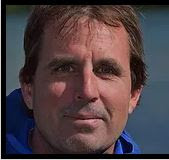
Fifteen months and counting --to Departure, that is -- and already the Arctic Return expedition is making headlines. First, partner Louie Kamookak was appointed to the Order of Canada. Awright, Louie! Well deserved! Then, adventurer Dave Garrow joined the team. Welcome aboard, Dave! Faithful readers got to meet Louie here.  And we're excited to bring aboard Dave, a mighty impressive addition who happens to be a long-time John Rae fan. But over on our website, he sounds like this:
An adventurer and landscape ecologist, Dave Garrow (M.Sc.) has a visceral draw to Canada’s cold, mountainous regions and has spent the last two decades exploring these wild places including ski expeditions to the Juneau, Stikine and Patagonian Ice Caps, Wrangell-St. Elias Mountains, Arctic Canada (Baffin and Bylot Island) and throughout the western mountain ranges of Canada.  When not travelling, he works for Parks Canada in Banff National Park, Alberta as a human-wildlife conflict specialist, and moonlights as a polar bear interpretive guide in Churchill, Manitoba.  Trained as a landscape ecologist, Dave works towards managing the complex and evolving interface between visitor use and ecological integrity on our wild spaces with a focus on carnivore behaviour and management.   He lives in Banff with his wife Mindy Johnstone and daughter Charly where they run the local yoga studio and play in the hills with their four year old golden retriever, Happy.


Read more »
Ken McGoogan
0 Comments
2017 Greatest Hits feature Scotland, Atwood, and the Arctic

2017 Greatest Hits feature Scotland, Atwood, and the Arctic


Last day of the year, I find myself driven out of bed at 5 am to look back at 2017, and to say hey to readers who have been checking in here. We're up over 20,000 views per month -- a far cry from pop-culture blogging numbers, but I'll take it. And I'll defer to the "overview stats" page at the back of this blog to offer up an orderly, top-five guide through the past year. . . .

And so we beat on, as F. Scott Fitzgerald wrote, like boats against the tide, borne back ceaselessly into the past . . . .


.


Read more »
Ken McGoogan
0 Comments
2019 John Rae Arctic Return Expedition rockets into cyberspace

2019 John Rae Arctic Return Expedition rockets into cyberspace


The website is live. The expedition is all systems go. The team is still growing. Sponsors are flocking to the cause. To learn all about the Arctic Return expedition, click on . . . this link! Meanwhile, see below for truncated introductions to some key players.

Expedition Team:

For over 20 years, expedition leader David Reid has been involved in the Arctic expedition and travel business. To date he has led, organized or participated in more than 300 Arctic and Antarctic expeditions, trips and projects. In that time he has traveled thousands of miles by dog sled, ski, snowmobile, boat, kayak, ship, foot and most recently by bike, becoming the first person to cross Baffin Island by fat-tire bike.

Andrew Bresnahan is a physician and anthropologist from Labrador, Canada. An explorer and visual storyteller, Andrew's work brings him from rural and remote northern clinics to the communities and wild backcountry of the circumpolar world. Andrew has worked as an expedition doctor and anthropologist throughout Inuit Nunaat, from Greenland and the Labrador coast across the Northwest Passage to the western Arctic. An avid skier, climber, kayaker, and outdoor educator, Andrew is at home on Canada’s north coast.


Expedition Partners:
Ken McGoogan is an award-winning author-historian who has published more than a dozen books, among them Fatal Passage, Lady Franklin's Revenge, and Dead Reckoning: The Untold Story of the Northwest Passage. In 1999, with Louie Kamookak and Cameron Treleaven, he placed a memorial plaque in the High Arctic beside the ruins of the cairn that John Rae built in 1854.


GJOA HAVEN CONSULTANT: Louie Kamookak is an Inuit historian and educator whose research into Inuit oral history has been crucial in unlocking the secrets of the lost Franklin Expedition, including the whereabouts of Franklin's ship, the Erebus. Louie is an honorary vice-president of the Royal Canadian Geographical Society, which awarded him the Erebus Medal for his role in the search and discovery of HMS Erebus. He spends a lot of time out on the land, teaching younger people the ways of his ancestors.


Andrew Appleby: "I was drawn to Orkney and John Rae since childhood. On a tall ship cruise in Scapa Flow in 1992, we passed The Hall of Clestrain. The Captain remarked on the state of The Hall. I determined I would do something about it. I helped form The Orkney Boat Museum at Clestrain. When that dissolved I was determined to initiate The John Rae Society. We have achieved a great deal since then!"


Read more »
Ken McGoogan
0 Comments
 BIG ICE never fails to work MAGIC!

BIG ICE never fails to work MAGIC!


Final posting from our Adventure Canada voyage Out of the Northwest Passage . . .
Day 15: Ilulissat


Late afternoon in Ilulissat, voyagers returned from a 90-minute zodiac cruise among the icebergs looking and sounding exhilarated. The message they carried: BIG ICE! BIG! FANTASTIC! Ilulissat is the third-largest town in Greenland, with 4,541 people (as of 2013) and 6,000 dogs. This is the birthplace of explorer-anthropologist Knud Rasmussen (1879-1933), and his childhood home has become a notable museum. But the main attraction is the Jakobshavn Glacier, a UNESCO World Heritage Site since 2004.
The Ilulissat Icefjord flows past the town at 45 metres per day. It produces 35 billion tons of ice each year, and spawns vastly more icebergs than any glacier in the Canadian Arctic. And that explains why, for the cruise, our expedition leader, M.J., put a full complement of 20 zodiacs in the water.
After debarking in the morning, most voyagers undertook the avidly awaited three-kilometre walk through the colorful town, where construction is the order of the day. We hiked to the boardwalk and beyond, scrambling up a hilltop vantage point to look out over the flowing river of ice. This river is believed to have spawned the iceberg that sank the Titanic. Instead of retracing our steps, a couple of us followed the Big Blue Dots and mini-cairns around the back, looking out over the ice all the while, switching eventually to a line of Red Dots that led us back to the start of the boardwalk. This was a good stiff hike and scramble.
Back on the ship, we had intended to follow the zodiac cruise, on this super-packed day, with the polar plunge. But because a good number of people were feeling the chill, we postponed that until tomorrow and set out sailing south through Disko Bay. That inspired the inevitable Disko Party in the Nautilus, complete with crazy costumes, and the rest is best passed over in dignified silence.
[Merry Christmas, y'all!]
Read more »
Ken McGoogan
0 Comments
Arctic landscape calls out for Return

Arctic landscape calls out for Return


Voyaging Out of the Passage with Adventure Canada
Day 13: Qikiqtarjuak

“The whalers used to call us Yaks,” Billy Etooangat said as he rode back to the ship in the zodiac to retrieve his luggage. He was arriving home in Qikiqtarjuak in the sunshine. “After Yaks, we were Eskimos.” He took a beat. “I didn’t mind that, but then I became aboriginal . . . an aboriginal person. Now I am indigenous.” The man at the helm of zodiac, David Reid, said, “What would you like to be called?” Billy answered: “A Canadian.”
Billy’s hometown, called Qik by those in the know, has a population of 600, which makes it the smallest community we visited. The handy-dandy postcards that people were giving out note that Qik is 100 km north of the Arctic Circle and 483 north of Iqualuit. A favorite slogan, especially popular on the backs of white sweatshirts, is, “Qik’in It / Above The / Artic Circle.” The town has everything you find in the larger centres – health centre, visitor centre, Co-Op, Northern Store – and also a larger percentage, or so it seemed, of fluent and friendly English speakers.
The scenery is the biggest highlight. We made our way, most of us, to the massive inukshuk on a high hill at the back of town, wending upwards along a rock-lined path, and wow! what a vista of harbor, beaches, mountains and, as it happened, a large flat iceberg, sparkling in the sun. The half dozen snorkelers who went out with Rick Stanley and Neil Burgess returned to the ship abuzz with the excitement of ranging along near the iceberg.
Mid-afternoon found travelers partying at an Inuit Social in the Nautilus Lounge. People crowded around a table near the back to sample Narwhal muktuk, char, smoked or dried, and dried caribou. Fifteen or twenty were playing a game on the dance floor when a whale sighting – “Bowhead! thar she blows!” – lured everyone outside, including master of ceremonies Derek Pottle. He called it a “whale break” and afterwards returned to the festivities.
As we sailed southeast along the coast of Baffin, we spotted a cargo ship at work. It was clearing detritus from an old Dew Line Site. Then came a sighting of multiple bowheads fluting and blowing, and the captain managed to draw the ship to within less than 200 metres. Marine mammal expert Pierre Richard said we saw more than ten bowheads. Best viewing of the voyage!
Later, during recap, David Reid stepped forward. Last spring, Reid led a four-person, four-dog expedition in circumnavigating Bylot Island: 29 days, 540 kilometres. During this Adventure Canada voyage, while chatting with friends, Reid settled on a challenging new project -- a re-enactment. As an emigrant Scot who worked for the Hudson’s Bay Company, and lived two decades among the Inuit in the High Arctic, Reid feels a special affinity for 19th- century explorer John Rae.
For his next project, he will reprise Rae’s 1854 expedition – the one on which he discovered both the final link in the first navigable Northwest Passage and the fate of the Franklin expedition (cannibalism among some later survivors). This will mean traveling on skis or snowshoes roughly 650 km from Repulse Bay to Gjoa Haven via Point de la Guiche, where Rae built a cairn on the west coast of Boothia.
Reid will undertake this 35-day Arctic Return Expedition to call attention to the magnificence of Rae's achievements, and in hopes that it will draw attention to the drive to restore the Hall of Clestrain in Stromness, where Rae was born. He will put together a three-or-four person team with a view to setting out from Repulse on March 31, 2019.
Read more »
Ken McGoogan
0 Comments
Wrestling Visions of Climate Change in the Northwest Passage

Wrestling Visions of Climate Change in the Northwest Passage


Sailing Out of the Passage with Adventure Canada
Day 12: Aujuittuq National Park

Katabatic winds came roaring down off the mountains of the fjord. By some estimates, they were gusting up to 80 km, carrying higher-density air under the influence of gravity. Just before noon, the winds forced a brief closure of all decks for safety sake. But then, without explanation – though maybe we rounded a corner -- the winds suddenly died to nothing. The whitecaps ceased frothing and, once again, all was right with the world. We were back out on deck, cruising along among spectacular mountain peaks. Afternoon would bring more adventure.
But first, early in the morning, Jackie Dawson gave a memorable presentation, arguing that the Canadian Arctic is not experiencing a shipping boom and won’t be doing so any time soon. Currently serving as Canada Research Chair at the University of Ottawa. Dawson has been examining Arctic shipping trends for more than ten years with as many as 15 graduate students at a time.
Dawson said climate change is causing reductions in sea ice. “We have 19 more days of open water in the Northwest Passage than we did ten years ago.” But the break-up of the ice-pack in the Arctic Ocean is pouring multi-year ice directly into the northern route of the Passage. “It could be 75 to 100 years before that ice pack is melted,” she said. “The northern route will be choked with ice for a long time.”
The Northwest Passage is nowhere near “open for business.” Canada has a long way to go to make the Arctic a viable region for ship traffic: “We don’t have the infrastructure.”
More ships are indeed sailing through the southern route of the Passage. But the traffic volumes in Arctic Canada remain tiny as compared with those of other regions, such as Svalbard, Greenland, and Franz Josef Land. ‘We don’t have a million vessels,” she said, “but the risks in Canada are much higher.” Ice and wind are among the greatest hazards for ship navigation, and while Canada has established corridors, most of its Arctic waters remain uncharted.
While climate change is reducing the amount of ice in the Canadian Arctic, other factors play a major role in any decision to ship goods through the Passage. The cost of insurance, for example, is currently creating a bottleneck. And the port and railroad facilities available via Prince Rupert, British Columbia, may well offer a cheaper alternative for decades.
But did I mention the afternoon? At Auyuittuq, we went ashore onto the mud flats of an alluvial plain that wound slowly uphill among striking mountain peaks. We went for various hikes – extreme, long, medium, short – and we wandered within a wide perimeter. Many passengers went for a half-hour zodiac cruise, and were surprised to see the hotel manager, Eckhart, arrive in a white polar bear suit, along with two assistants. They brought hot chocolate and Bailey’s, and most of us managed to choke it down.
Come evening, host David Newland built on the presentation of Jackie Dawson by showing everyone an especially cogent table demonstrating that the American Navy believes in climate change. The table predicts that by 2025, a viable passage will cross the Arctic region from east to west– but it won’t be the Northwest Passage. Rather, climate change will open a route almost directly across the North Pole.
[Pix by Sheena Fraser McGoogan]
Read more »
Ken McGoogan
0 Comments
Beechey Island whiteout inspires Dead Reckoning video

Beechey Island whiteout inspires Dead Reckoning video


Scenes from September, voyaging Out of the Northwest Passage with Adventure Canada.

Day 8: Beechey Island
For visiting Beechey Island, the best-known historical site in the Arctic, the day was perfect: cool and overcast. We went ashore in zodiacs and climbed the rocky, snow-swept slope to the graves of the first three sailors to die during the 1845 Franklin expedition. The men perished here in 1846 and, given that Sir John was famous for his sonorous sermons, we can be sure he buried them with due ceremony. Franklin and 125 men sailed on south down Peel Sound in their two ships, the Erebus and the Terror, to meet their own fate.
On Beechey, in the 1980s, forensic scientist Owen Beattie autopsied the bodies of Franklin’s men, John Torrington, William Braine, and John Hartnell. At the gravesite, archaeologist Latonia Hartery vividly described the process. A fourth sailor was buried here in 1854 – Thomas Morgan, a man from Robert McClure’s ship, the Investigator. He had been rescued from that vessel, which was trapped in Mercy Bay on Banks Island, some distance west, but was already so sick that he did not survive.
After viewing the graves, first discovered in 1850, most passengers hiked 1.6 kilometres along the shoreline to check out Northumberland House (now a ruin). Searchers built it in 1852-53, mainly from the wreckage of an old whaler. They deposited supplies for the use of Franklin, should he return this way, and also for any later searchers. Several later memorials and markers placed here are of tangential interest.
But on the ground behind the remains of the house, we saw tin cans from the original expedition, filled with stones and lined up to form a cross. Also, we saw a wooden two-by-four etched with the name of another explorer: “J.E. Bernier / 1906.” Canadian Joseph Bernier visited here during his multi-year expedition to assert Canadian sovereignty over the entire Arctic archipelago.
Finally, here too we saw what’s usually called the Bellot monument, which features a marble slab sent from England by Lady Franklin. It was installed to the memory of the Franklin expedition by Leopold McClintock in 1857. Four years before that, while anchored nearby, Joseph-Rene Bellot had volunteered to trek north along the ice of Wellington Channel to deliver a message. He took two men. The ice broke off as they walked and they spent the night in a tent on a large ice floe. Come morning, Bellot stepped outside the tent . . . and never reappeared. Obviously, he had slipped off. The other two men waited until the floe returned to shore and jumped off to safety . . . . and sorrow.
Back on the Ocean Endeavour, Dr. Andrew Breshnehan -- always merry and bright -- gave an insightful talk on Circumpolar Health. Later, while in the Nautilus Lounge we studied an image of the Beechey Island graves, passenger Keith MacFarlane introduced a moment of silence with a moving tune on the bagpipes. And later still, a number of staffers – David Newland, Julie Bernier, Daniel Freeze, Lynn Moorman, Julie Knox, Gay Peppin, Dr. Andrew – went the extra mile to organize an unforgettable book launch for Dead Reckoning: The Untold Story of the Northwest Passage. They made the author mighty grateful.
[You can check out the dazzling, 3-minute, Beechey Island book-launch video by clicking here.]
[Pix by Sheena Fraser McGoogan]

Read more »
Ken McGoogan
0 Comments
Before turning mainly to books about arctic exploration and Canadian history, Ken McGoogan worked for two decades as a journalist at major dailies in Toronto, Calgary, and Montreal. He teaches creative nonfiction writing through the University of Toronto and in the MFA program at King’s College in Halifax. Ken served as chair of the Public Lending Right Commission, has written recently for Canada’s History, Canadian Geographic, and Maclean’s, and sails with Adventure Canada as a resource historian. Based in Toronto, he has given talks and presentations across Canada, from Dawson City to Dartmouth, and in places as different as Edinburgh, Melbourne, and Hobart.