Theme Layout

Boxed or Wide or Framed

[style4]

Theme Translation

Display Featured Slider

No

Featured Slider Styles

Display Grid Slider

Grid Slider Styles

Display Author Bio

Display Instagram Footer

Dark or Light Style

Search This Blog

Blog Archive

Followers

Popular Posts

Pages

Frozen Dreams bring Dead Reckoning to T.O.

Frozen Dreams bring Dead Reckoning to T.O.


OK, so the photo is from Back in the Day. August 1999, to be precise. That would be me on King William Island as taken by the late Louie Kamookak. We were atop Mount Matheson on King William Island. Behind me: Rae Strait.
I'll probably mention this adventure when I give an illustrated talk called FROZEN DREAMS: Dead Reckoning in the Northwest Passage. That's going to happen in the near future at three different venues in the Toronto area. 
The talk is based on my 14th book, Dead Reckoning, which is now available in paperback. The book challenges the conventional history of Arctic exploration and highlights the contributions of fur-trade explorers and the indigenous peoples, notably the Inuit. 
In recent times, I have been visiting the Arctic almost every year, sailing as a resource historian with Adventure Canada. I am also involved in planning the 2019 Arctic Return Expedition, which will retrace the 1854 journey of explorer John Rae, who discovered the final link in the first navigable Northwest Passage. Hope to see you here or there!
Oct. 30: Arts & Letters Club
Nov. 5: Canadian Federation of University Women, Mississauga
Nov. 14: Carlton Theatre Lecture Series
Read more »
Ken McGoogan
0 Comments
Detective hunts psychopathic killer in Sixties San Francisco

Detective hunts psychopathic killer in Sixties San Francisco


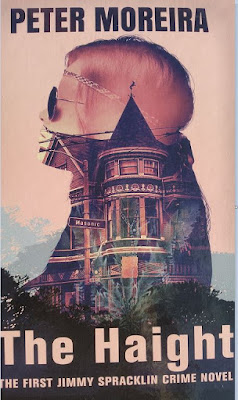
Hands up if you remember when the Haight-Ashbury was THE place to be. Well, it was a magical time, let me tell you -- before it went bad. Peter Moreira's detective novel, set shortly after the Summer of Love, finds detective Jimmy Spracklin trying to solve a series of brutal murders in The Haight. Spracklin is a terrific tough-guy detective. Of course he is flawed. His marriage is in trouble, partly because he is fiercely committed to his job. And he is desperate to find his teenage stepdaughter, who disappeared into the District some months before. Moreira sets his eventful crime novel against the larger political landscape, as Spracklin is also a Kennedy Democrat hoping that Senator Bobby Kennedy will give his career a boost. The author builds the stakes with every twist and turn, and when the daughter takes up with a psychopathic killer, Spracklin's quest becomes a race against time. Highly recommended for those who enjoy a cracking good detective story -- or for anyone who remembers when the Haight was the centre of the universe.
Read more »
Ken McGoogan
0 Comments
MYSTERY SOLVED!!! Polar Bears explain Fate Of the Franklin Expedition

MYSTERY SOLVED!!! Polar Bears explain Fate Of the Franklin Expedition


Ken McGoogan in Arctic.


Polar Bears Explain the Fate of the Franklin Expedition

What happened to the Franklin Expedition? Researchers have been debating that since 1847, two years after Sir John Franklin disappeared into the Arctic with 128 men. From the note later found at Victory Point on King William Island, most people believe that in April 1848, 105 men left the two ice-locked ships. The note tells us that already, nine officers and fifteen seamen had died. That represents 37 per cent of officers and 14 per cent of crew members. Historians have scratched their heads: why such disproportionate numbers?
Researchers have spent vast amounts of time and energy inquiring into the deaths of the first three sailors to die, whose graves remain on Beechey Island. Did lead poisoning kill them? Botulism? Zinc deficiency leading to tuberculosis? But wait. Maybe those three early deaths were anomalies – exceptions that tell us nothing about subsequent events. Perhaps the other twenty-one dead -- nine officers, twelve sailors -- died because of some event, some accident or injury.
A few scientists have wondered if these twenty-one men ingested something that others did not. But nobody, to my knowledge, has publicly invoked the calamitous Danish-Norwegian expedition of the early 1600s, which lost sixty-two men out of sixty-five. In 1619-20, while seeking the Northwest Passage, the explorer Jens Munk led two ships filled with sailors into wintering at present-day Churchill, Manitoba.
In my book Dead Reckoning, drawing on Munk’s journal, I detail the unprecedented miseries that ensued. During my research, I had turned up an article by Delbert Young published decades ago in the Beaver magazine (“Killer on the ‘Unicorn,’" Winter, 1973). It blamed the catastrophe on poorly cooked or raw polar-bear meat.
Soon after reaching Churchill in September 1619, Munk reported that at every high tide, white beluga whales entered the estuary of the river. His men caught one and dragged it ashore. Next day, a “large white bear” turned up to feed on the whale. Munk shot and killed it. His men relished the bear meat. Munk had ordered the cook “just to boil it slightly, and then to keep it in vinegar for a night.” But he had the meat for his own table roasted, and wrote that “it was of good taste and did not disagree with us.”
As Delbert Young observes, Churchill sits at the heart of polar bear country. Probably, after that first occasion, the sailors consumed more polar-bear meat and Munk did not think to mention it. During his long career, he had seen men die of scurvy and knew how to treat that disease. He noted that it attacked some of his sailors, loosening their teeth and bruising their skin. But when men began to die in great numbers, he was baffled. This went far beyond anything he had seen. His chief cook died early in January, and from then on “violent sickness . . . prevailed more and more.”
After a wide-ranging analysis, Young points to trichinosis as the probable killer —a parasitical disease, not fully understood until the twentieth century, which is endemic in polar bears. Infected meat, undercooked, deposits embryo larvae in a person’s stomach. These tiny parasites embed themselves in the intestines. They reproduce, enter the bloodstream and, within weeks, encyst themselves in muscle tissue throughout the body. They cause the terrible symptoms Munk describes and, left untreated, can culminate in death four to six weeks after ingestion.
So, back to the Franklin expedition. Could trichinosis, induced by eating raw polar-bear meat, have killed those nine officers and dozen seamen? And galvanized the remaining men into abandoning the ships? And rendered many of them so sick that they could hardly think straight or walk. And made some of them so horribly sick that they had to be quarantined into a separate tent?
In recent years, while visiting Beechey Island with Adventure Canada, more than once my fellow voyagers and I have been driven off by polar bears. We retreat into the zodiacs at first sign of approach. In that same situation, spotting a polar bear, how would Franklin’s men have responded? They would have killed those bears and eaten them -- perhaps bringing some of the meat onto the ships. That undercooked polar-bear meat, unevenly distributed among officers and crew, might well have led to the lopsided fatality statistics . . . and to all the rest. So, anyway, I suggest in Dead Reckoning.
When I put forward this theory to online-friends, some balked. By the time Franklin sailed, they observed, in the mid-19th century, Royal Navy officers knew that bear meat could wreak havoc in the human body, even if they did not fully understand exactly how. This is undoubtedly true. But then a supportive contributor drew attention to a contemporary video broadcast in which an expert hunter describes how he and his companions got horribly sick after eating poorly cooked bear meat. On an episode of Meat Eater, Steven Rinella admits to feeling mortified: “I have been preaching about the importance of cooking bear meat to my viewers and readers for a decade now,” he says, “and it’s really embarrassing.”
Rinelli knew very well that bear meat could be dangerous. But he went ahead and ate it anyway. Can anyone doubt that the men of the Franklin expedition, subsisting on short rations, desperate for a change of diet, would have made the same decision? Within the next few years, Parks Canada will almost certainly turn up some decisive evidence -- written records or human remains or both -- as divers investigate the Erebus and Terror. Until then, my money is on polar-bear-meat-induced trichinosis.
This essay turns up on a wonderful website devoted to Canadian mysteries. Check it out at The Franklin Mystery: Life and Death in the Arctic.

Read more »
Ken McGoogan
0 Comments
Lovely paperback edition lists under $20

Lovely paperback edition lists under $20


The paperback is here! A single author's copy anyway, with countless others flowing into bookstores next week. Hats off to the folks at HarperCollins Canada! What a lovely package! This edition is slightly smaller than the hardcover . . . the perfect size!And it contains new and improved maps! And here on the back cover, a reviewer says, "This book is a masterpiece. . . . " And what is not to love about a list price under $20? OK, one cent under . . . but still! My day, no my week, is made.

Read more »
Ken McGoogan
0 Comments
Voyage around Scotland inspires Celtic Life spread on the Highland Clearances

Voyage around Scotland inspires Celtic Life spread on the Highland Clearances


The October issue of Celtic Life International features a gorgeous 3-page spread on the 1853 Highland Clearances at Knoydart. The writer -- that would be moi -- turned up in the vicinity by great good fortune while sailing with Adventure Canada earlier this year. A version of the article, which begins roughly as below, will turn up in a 2019 book to be published by Patrick Crean / HarperCollins Canada. Working title: SPIRIT OF THE HIGHLANDERS: How the Scottish Clearances / Created Canada's First Refugees.

On day four out of the resort town of Oban, we awoke to find our expeditionary ship anchored in Isleornsay harbour off the Isle of Skye. This was not a planned stop. Overnight, faced with southwesterly winds gusting to 60 and 65 knots, the captain had taken the Ocean Endeavour north into the Sound of Sleat that runs between Skye and the mainland. Here he had found shelter in one of the most protected harbours on the east coast of Skye.
June 2018. We were circumnavigating Scotland, my wife, Sheena, and I, with Adventure Canada. We had stopped in Islay and would soon visit Iona, St. Kilda, Lewis, Shetland, Orkney.  We were among roughly 200 passengers and I was one of several resource people available to hold forth on matters of historical interest. This surprise anchorage drove me to my maps.
For the past few years, I had been researching Scottish Highlanders who emigrated to Canada in the 18th and 19th centuries. Some made the move of their own volition, but most were refugee victims of the Highland Clearances. During one of those Clearances, I recalled, a ship called the Sillery had anchored here at Isleornsay harbour. It had arrived late in July 1853 to carry off farmers who lived along the north shore of Loch Hourn, a broad inlet that enters the mainland six or eight kilometres due east of Isleornsay. That area was part of Knoydart in Glengarry.
I remembered wondering why the Sillery had not entered that inlet to reduce transport time. Now, onboard experts suggested that strong westerly winds – not unusual in these parts – would have made it difficult for any 19th-century sailing vessel to emerge out of that inlet. That explained why the Sillery had anchored in this sheltered harbour and the captain had set his crewmen to rowing across the sound.
Almost 100 years before that, in 1746, farmers from Knoydart had been among the 600 Highlanders who followed Macdonell of Glengarry into the catastrophe known as the Battle of Culloden. In the decades that followed, some had emigrated to Upper Canada and others to Nova Scotia. Still, by 1847, more than 600 people remained in the coastal settlements, though their numbers were then reduced by the Great Famine. But activist-journalist Donald Ross, who collected first-hand accounts of several Clearances, wrote that these crofters needed only a little encouragement to resume thriving as farmers.
In 1852, however, the newly widowed Josephine Macdonell gained control of the Knoydart estate. A Lowland industrialist named James Baird – a Tory member of Parliament -- had expressed interest in acquiring her lands, but only if they were unencumbered by paupers for whom he would become legally responsible. Ignoring the people’s offers to pay arrears caused by the potato famine, the widow Macdonell issued warnings of removal. “Those who imagine they will be allowed to remain after this,” she wrote, “are indulging in a vain hope as the most strident measures will be taken to effect their removal.”
In April 1853, she informed her tenants that they would be going to Australia, sailing courtesy of the landlord-sponsored Highland and Islands Emigration Society. In June, she amended that: they would travel instead to Canada, their passage paid as far as Montreal. On debarkation, they would each be given ten pounds of oatmeal. After that, they were on their own.
On August 2, 1853, with the Sillery anchored at Isleornsay, men with axes, crowbars, and hammers rowed across the inlet and landed. They joined a gang of mainlanders and began clearing farmers from their homes. The factor in charge ordered that after removing the tenants, his men were immediately to destroy “not only the houses of those who had left,” Donald Ross wrote, “but also of those who had refused to go.”
Burly men ripped off thatched roofs, slammed picks into walls and foundations, and chopped down any supporting trees or timbers. Eventually, Ross wrote, “roof, rafters, and walls fell with a crash. Clouds of dust rose to the skies, while men, women and children stood at a distance, completely dismayed.” According to Ross, "The wail of the poor women and children as they were torn away from their homes would have melted a heart of stone."
(To read the rest, check out the October issue of Celtic Life International.)
Read more »
Ken McGoogan
0 Comments
Grounding of expeditionary ship in the Arctic evokes memories but no worries

Grounding of expeditionary ship in the Arctic evokes memories but no worries


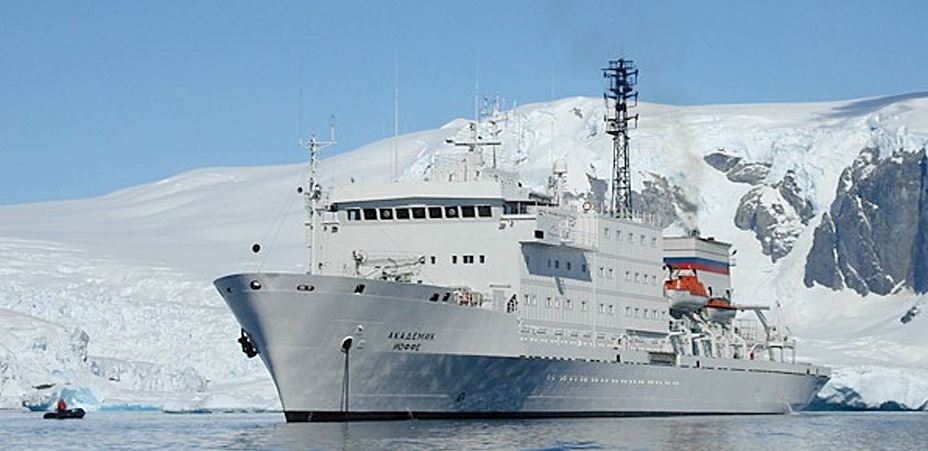
Sorry to hear that the Akademik Ioffe ran aground in the Arctic.
But the expeditionary cruise ship, on which I have sailed, has already been refloated.
The last time something like this happened, with the Clipper Adventurer back in 2010, we were on the ship, Sheena and I. It wasn't fun, obviously, but we were never in any real danger.
From what I have read, I don't believe the 160 or so people on the Ioffe are threatened in any way.
In 2010, our ship stayed grounded and we had to be rescued by the Canadian Coast Guard.
Given that the Ioffe has been refloated, and is reporting no hull breach, the ship will probably head to the nearest major port -- possibly Resolute.
A sister ship, the Akademik Sergey Vavilov, has been making its way to Kugaaruk, near where the ship slid onto a submerged shelf. It may already be there and taking on passengers from Ioffe.
Keep in mind that the Canadian Arctic is NOT like the Antarctic.
First, it is an archipelago of islands, which means land is never very far away.
The worst case scenario in 2010 would have found us bundled up in our cold-weather gear and zooming ashore in zodiacs to await the arrival on land of the coast guard. As it happened, the sun was shining and we waited, most of us, lounging on the top deck.
Second consideration: as in this case, other vessels are always within rescue distance.
The other concern is environmental damage. But given that the ship is floating again -- probably after discharging fresh drinking water to reduce weight -- the chances of that appear to be minimal.
Adventure tourism involving expeditionary vessels of this modest size brings important benefits to people who live in the Arctic.


Read more »
Ken McGoogan
0 Comments
Rock band Rhonda and the Cries for Help sing John Rae at the Hall of Clestrain

Rock band Rhonda and the Cries for Help sing John Rae at the Hall of Clestrain


The trouble began when Fran Flett Hollinrake, aka the Queen of St. Magnus Cathedral, asked in all innocence, "When's the new album coming out?" We could see what she meant. Tom Muir, Rhonda Muir, Sheena Fraser McGoogan and I had not yet settled on a name for our emerging rock band. But the Beach Boys sprang to mind and would you believe it? they were singing Help Me, Rhonda. So we became Rhonda and the Cries for Help. The photo is by Orkney's own John Welburn, a leading member of the John Rae Society. And if you have read this far, I know you want to catch one of the Cries for Help talking John Rae to Orkney News, filmed by Fiona Grahame. All you have to do is click this link:  https://youtu.be/CBHroVUU_uU.


Read more »
Ken McGoogan
0 Comments
Before turning mainly to books about arctic exploration and Canadian history, Ken McGoogan worked for two decades as a journalist at major dailies in Toronto, Calgary, and Montreal. He teaches creative nonfiction writing through the University of Toronto and in the MFA program at King’s College in Halifax. Ken served as chair of the Public Lending Right Commission, has written recently for Canada’s History, Canadian Geographic, and Maclean’s, and sails with Adventure Canada as a resource historian. Based in Toronto, he has given talks and presentations across Canada, from Dawson City to Dartmouth, and in places as different as Edinburgh, Melbourne, and Hobart.