Theme Layout

Boxed or Wide or Framed

[style4]

Theme Translation

Display Featured Slider

No

Featured Slider Styles

Display Grid Slider

Grid Slider Styles

Display Author Bio

Display Instagram Footer

Dark or Light Style

Search This Blog

Blog Archive

Followers

Popular Posts

Pages

Yo, Orkney! Skara Brae to Clestrain

Yo, Orkney! Skara Brae to Clestrain


People were living at Skara Brae before Egyptians built the pyramids. By the time other neolitithic folk started work on Stonehenge in England, they had resided here, facing out over the salt water, for three to four hundred years – and even had time to abandon the site. To stand here today, in the 21st century, gazing out at surf-worthy waves, proved both humbling and awe-inspiring. More than one person incidentally gave thanks that our expedition leader had decided we would overnight at the dock in Kirkwall, rather than plunge out into what would certainly have been one horrendous night on the water.
But what a place is Skara Brae – the best-preserved Neolithic village in northern Europe, and a site that offers an entree into the daily lives of people who lived 4,500 years ago. Here they cooked, there they ate, and here, just here, they curled up and slept. Today, as well, while rambling around with Adventure Canada, we visited the nearby Ring of Brodgar, a world-famous circle of standing stones, and passed by a recently begun archaeological dig between the two, the Ness of Brodgar, that points back even earlier, to the Mesolithic era of 7000 years ago, when hunter-gatherers roamed these hills.

Roll on to the Hall of Clestrain, which overlooks Hoy Sound near Stromness. Birthplace in 1813 of Arctic explorer John Rae, this listed building is now the focus of a restoration campaign led by the John Rae Society, which is determined to turn Clestrain into a world-heritage centre. Three buses shuttled passengers from one location to another, while other visitors rambled around Kirkwall, visiting St. Magnus Cathedral, which contains a gorgeous memorial to Rae, and also the explorer’s grave, situated behind this magnificent 12th century edifice.
Rumor had it that some travelers indulged in serious retail therapy, and suggestive evidence turned up in certain newly observed artifacts. Come evening, two Orcadians came aboard. Andrew Appleby, president of the John Rae Society and a professional potter from nearby Harray (the Harray Potter), invited people to visit his studio, where he throws pots. And native Orcadian historian Tom Muir, president of the Orkney Story-Teller’s Association, entertained with a series of entrancing tales that ranged from the dark and foreboding to the sublime and sorrowful. His was a tour de force performance.


Read more »
Ken McGoogan
0 Comments
Outlander lives on the Isle of Lewis

Outlander lives on the Isle of Lewis


We arrived on the Isle of Lewis around 6 a.m., precisely on schedule, and tied up at the dock so that passengers could walk off the ship. That we did with voyagers organized into six groups. We piled into three buses in the morning, the same three in the afternoon, and everyone got a chance to ride the island in a circle with no stress, no bother. Clockwork.
This was our Adventure Canada voyage around Scotland last June.
On our bus we had a wonderful guide named Doro, short for Dorothea, who had an answer for every question, no matter how arcane. The Dun Carlaway Broch dates from around the final century B.C., making it one of the last to be built. It remained in use, probably as both castle and vertical farmhouse, until the Vikings arrived in the early 800s. My favorite story about the broch derives from the 16th century, when the Morrisons of Ness took refuge here after getting caught raiding cattle from the local MacAulays. The Morrisons blocked the broch entrance, which was designed for that purpose, but Donald Cam MacAulay scrambled up the outer wall, threw down burning heather, and forced the would-be thieves to stumble out to meet their fate.
The Callanish Stones are the largest assemblage of such mystery objects in all Europe. Dating back 5200 years, they are not only older than those at Stonehenge but are arranged in the shape of a Celtic Cross and are also readily accessible. No cars roar past on nearby highways. And if you have no fear of being shunted off backwards in time, Outlander-style, you can reach out surreptitiously and touch them.
Even so, on Lewis, I got the biggest kick out of visiting the nine houses at the Gearrannan Blackhouse Village, which hark back to the 17th century. Here we see how the vast majority of Highlanders lived for centuries. The village highlight is the working blackhouse, which has been reconstructed to the year 1955, when inhabitants adapted and incorporated many of the features of the more modern “white houses” that arose after the end of the Second World War. A local guide named Mary, who was born and raised in this village, provided an evocative depiction of life during this period of transformation.
Before leaving Lewis, passengers got to visit Stornoway. Home to more than 7,000 people, it is by far the largest settlement in the Hebrides, and offers a range of shops, services and amenities. Many passengers visited Lews Castle and enjoyed its wooded walks and museum experience, which included multi-media atmospherics and a collection of several of the original Lewis Chessman. A bookstore on Cromwell Street enjoyed a run on Lewis-related books by mystery writer Peter May . . .  and on facsimile chessmen. 


Read more »
Ken McGoogan
0 Comments
Voyage around Scotland proves magical

Voyage around Scotland proves magical


           Savoring the sunshine view from the high hill in St. Kilda. Exploring the Blackhouse Village on the Isle of Lewis. Getting right down into the neolithic Broch of Gurness on Mainland, Orkney. On our Scotland Slowly voyage with Adventure Canada last June, the magical moments kept coming. As it happens, I wrote the logbook. AC has just published it and I find myself revisiting the whole experience.
On Day One, we sailed out of Oban not long after 7 p.m., with the waters calm and the sun setting among the islands. The arrival and boarding had brought the usual challenges.But more than half (116) of the passengers had sailed previously with Adventure Canada and that made the process of boarding easier than it might have been. Once on board, we made our way to the Nautilus Lounge, where we proceeded efficiently through the zodiac briefing. Then came the mandatory lifeboat drill and staff introductions. Expedition leader Matthew James (M.J.) Swan elaborated on the next day’s doings – a visit to Islay – and then we headed for our first white-linen-tablecloth dinner.
 Next morning, having sailed overnight from Oban, we boarded zodiacs off the coast of Islay, always with the sailors’ grip. We roared into Bowmore near the distillery that has made the town famous, home to one of the celebrated peaty whiskies from these parts. On landing, we climbed into buses for a ten-minute ride to the first historical site of the voyage: Loch Finlaggan. The Great Hall here, which for almost three centuries served as home to the Lords of the Isles, is now little more than two triangular end walls made of stone. But it was from here in 1164 that Somerled, the great sea lord of the western isles, organized his momentous invasion of the Scottish mainland.
The story emerged at the small visitors’ centre and in a series of plaques at the site. It begins in 1153, when in a major sea battle off the coast of Islay – just a few miles north of Finlaggan – Somerled defeated Godred IV and forced him to retreat to Norway. A decade later, in 1164, Somerled led an ambitious invasion of mainland Scotland. This was a crucial moment, the first great clash between two Celtic-World cultures – Norse-Gaelic and Anglo-Norman.
But soon after landing near Glasgow with tens of thousands of warriors, Somerled was slain – probably by the lucky throw of a spear. His massive army, whose troops included a large contingent from Dublin, withdrew in disarray. Finlaggan became home to the Lords of the Isles – descendants of Somerled, led by the MacDonalds -- who ruled the western Scottish Isles until 1494, when mainlanders under King James IV put paid to their independence.
From Finlaggan, we voyagers traveled by bus and van to Islay House Square. Now a five-star hotel, Islay House was formerly home to a Campbell laird. Out front, what was once a thriving courtyard is now a scattering of shops – and visitors took full advantage. Back on the ship, we enjoyed a whisky tasting before adjourning to the dining room for the captain’s dinner.
Day three found us visiting Iona Abbey, where that scholarly warrior Saint Columba arrived from Ireland, built a monastery, and established Christianity in Scotland. The monastery became arguably the most glorious edifice in the country – though the people of Orkney champion St. Magnus Cathedral. Iona became the burial site for many Scottish princes and kings.
A storm had rolled in during the morning as if to challenge our visit. Gusting winds and light rain had impeded our morning zodiac cruise to the island of Staffa. Some passengers had hoped to get inside Fingal’s Cave, famously the locale that inspired a celebrated composition (The Hebrides) by Felix Mendelssohn, as well as subsequent visits by well-known figures and even an on-location orchestral performance. The wind prevented entry, as it so often does, but the cruise proved invigorating and the island itself, created through three distinct volcanic eruptions, is geologically unique and spectacular. Incredible to think, as geologist David Edwards later relayed, that in 1772, a farming family was eking out a living on the rocky island. A few winters appear to have brought them to their senses, and they were gone by 1800.
Rumour has it that in June 2019, Adventure Canada will again circumnavigate Scotland. http://www.adventurecanada.com/trip/scotland-slowly-june-21-july-1-2019/
(Photos by Sheena Fraser McGoogan . . . except the one in which she appears)


Read more »
Ken McGoogan
0 Comments
Arctic adventurers recreate trek to Rae Strait

Arctic adventurers recreate trek to Rae Strait


The Arctic Return Expedition is all systems go. A reconfigured four-man team will set out March 25, 2019 to recreate the most successful Arctic overland expedition of the 19th century. On his 1854 surveying adventure, accompanied by an Inuk and an Ojibway, Orcadian explorer John Rae discovered both the terrible fate of the lost Franklin expedition and the final link in the first navigable Northwest Passage.
Next March, veteran polar adventurer David Reid will lead an outstanding team in traveling 650 km overland from Naujaat (Repulse Bay) to Rae Strait, following in the footsteps of John Rae, William Ouligbuck Jr., and Thomas Mistegan. When personal considerations forced withdrawals, Reid rounded out his team with experienced, highly skilled adventurers.
The party now includes:
 n  Canadian adventurer Frank Wolf, named one of Canada’s top 100 explorers by Canadian Geographic Magazine in 2015. Wolf, the first to canoe across Canada in a single season, also cycled 2,000 km in winter on the Yukon River from Dawson to Nome. He has documented his adventurers in articles and films and recently published his first book, Lines on a Map (Rocky Mountain Books).
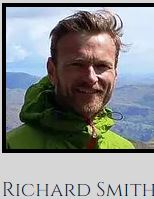
  n  Scottish adventurer Richard Smith, PhD, who studied as an astrophysicist, moved into Information Technology, and served with the Royal Marine Commandos and the Special Boat Service. Smith has climbed, trekked or kayaked in Alaska, Greenland, Nepal and the French Alps, and explored the jungles of Belize and the deserts of Oman.
  n  Adventure film-maker Garry Tutte, who created an educational web-series from Mt. Everest, documented a 7000 km car rally from England to Gambia across the Sahara Desert, and travelled from the remote islands of the Philippines to Hong Kong to create an award-winning film. In 2017, Tutte led the media team aboard the Canada C3 expedition as it circumnavigated the country’s 23,000 km coastline from Toronto to Victoria via the Northwest Passage.
  n  Reid himself, who lived on Baffin Island for 20 years and has led, organized or participated in more than 300 Arctic and Antarctic expeditions, trips and projects. In that time he has traveled thousands of miles by dog sled, ski, snowmobile, boat, kayak, ship, foot and most recently by bike, becoming the first person to cross Baffin Island by fat-tire bike.
The expedition is hoping to raise funds for the restoration of John Rae's birthplace, the Hall of Clestrain. The flagship sponsor is The Royal Institution of Chartered Surveyors (RICS). The award-winning travel company Adventure Canada and Canada Goose are also lending major support. For more details check out the expedition website.


Read more »
Ken McGoogan
0 Comments
Surely #MeToo should be all over The Wife, The Ghost Brush, Colette, and Lady Franklin?

Surely #MeToo should be all over The Wife, The Ghost Brush, Colette, and Lady Franklin?


 So we caught the hit film The Wife last night. The movie, based on a novel by Meg Wolitzer, features a tour-de-force performance by  Glenn Close. But what struck me is that you can change the culture, the time period, the mode of expression . . . yet the story remains the same.
-- In The Wife, Joan Castleman does the writing . . . but her husband Joe wins the Nobel Prize. Backstory set in 1990s U.S.A.
-- The Ghost Brush, by Katherine Govier, is set in Japan in the late Edo period. The daughter Katsushika Oei does the printmaking, her father Hokusai takes the credit.
-- Colette, set in late 19th century France, finds the eponymous heroine doing the writing . . . and her husband Willy reaping the celebrity.
-- In Lady Franklin's Revenge, which unrolls through Victorian England, Jane Franklin emerges as the real explorer, the one who orchestrates the mid-to-late career of Sir John Franklin . . . yet he is the one celebrated in myth and legend.
The Wife, The Ghost Brush, Colette, Lady Franklin's Revenge . . . surely #MeToo should be all over this?


Read more »
Ken McGoogan
0 Comments
Frozen Dreams Quintet makes for Bethlehem

Frozen Dreams Quintet makes for Bethlehem


People tell me I am too modest and self-effacing. They say, Ken, enough with the shy-and-retiring. You have to stop shunning the spotlight. Lately, in response, I've been banging the drum for the newly released paperback edition of Dead Reckoning. While working up a nifty little song-and-dance, I chanced upon the above slide and The Frozen Dreams Quintet. So of course I thought of Yeats and his rough beast slouching towards Bethlehem to be born. And I realized that, with Christmas whirling toward us, probably I should ask my publisher to drop everything and bring out my Arctic books as a boxed set. Makes sense, right?

Read more »
Ken McGoogan
0 Comments
St. Kilda evokes Flight of the Highlanders

St. Kilda evokes Flight of the Highlanders


The December issue of Celtic Life International features a gorgeous 3-page spread on a visit to the Scottish island of St. Kilda. We turned up in the vicinity while sailing with Adventure Canada earlier this year. A version of the article, which begins as below, will appear in a 2019 book to be published by Patrick Crean / HarperCollins Canada. We're calling it FLIGHT OF THE  HIGHLANDERS: Canada's First Refugees.

Unbelievable. Overwhelming. Voyagers who have visited the archipelago of St. Kilda more than a dozen times declared this The Best Visit Ever. If they had said anything else, the rest of us would not have believed them. Bright sunshine, balmy temperatures, no wind . . . was there a cloud in the sky?
During the morning, when we arrived in this vicinity aboard the Ocean Endeavour, the day had looked less promising. Most ships that reach St. Kilda never land a soul. Winds too rough. Today, a serious swell caused people to doubt we would make it ashore. But in an inspired bit of decision-making, our Adventure Canada expedition leader turned the day upside down, switching early with late.
Instead of attempting a morning landing, we sailed directly to the bird cliffs of Stac Lee, home to the largest colony of gannets in the world. As the winds died and the sun came out, the captain showcased his navigational skills. Seventy or eighty metres in front of the towering black wall, he held ship steady. We found ourselves gazing almost straight up at a whirlwind of wheeling birds more than 400 metres above. I’m no birder but this was impressive.
A back-deck barbecue kept us busy as we sailed to Hirta, the archipelago’s main island. We’re talking about the remotest part of the British Isles, 66 kilometres west of Benbecula in the Outer Hebrides. I had landed here once and knew enough to remain dubious. But on arriving, we found the swell had receded. We piled into zodiacs and zoomed ashore. Incredible!

St. Kilda is one of very few places with Dual World Heritage Status for both natural and cultural significance. Bronze Age travellers appear to have visited 4000 to 5000 years ago, and Vikings landed here in the 800s. Written history reveals that a scattering of people (around 180 in 1700) rented land here from the Macleods of Dunvegan on the Isle of Skye. While living in a settlement (Village Bay) of stone-built, dome-shaped houses with thatched roofs, they developed a unique way of life, subsisting mostly on seabirds.
Gradually, as better ships enabled more contact with the outside world, they came to rely more on importing food, fuel and building materials. They constructed better houses. In 1852, 36 people emigrated to Australia, so beginning a long slow population decline. During the First World War, a naval detachment brought regular deliveries of food. When those ended after 1918, St. Kildans felt increasingly isolated. In 1930, the last 36 islanders were evacuated to the Scottish mainland.
During our June visit, we strolled along the curved Village Street where these last holdouts had resided. Most passengers found time to climb the saddle between two high hills. After a rise in elevation of perhaps 150 metres, we came to a cliff edge. Gazing back over the vista in the sun – the Village Street, the scattered beehive cleits, the Ocean Endeavour in the harbour, the occasional zodiac, the distant mountains – a consensus emerged: unbelievable!
Beyond this, everyone had their personal highlights. I registered two. The first came when I found the beehive cleit that stands today on the foundations of what was once the home of Lady Grange. She was an articulate, headstrong woman who, in the 1730s, spent eight lonely years as a prisoner on this island. While living in high-society Edinburgh, she learned that her husband was having an affair in London. Infuriated, she had threatened to expose him as a treasonous Jacobite.
That gentleman – who was indeed conspiring with such powerful figures as Macdonald of Sleat, Fraser of Lovat, and Macleod of Dunvegan -- responded by having his irrepressible wife violently kidnapped and bundled off, ultimately, to this almost inaccessible island. Here Lady Grange endured as the only educated, English-speaking mainlander on Hirta except for the minister and his wife. Her house is long gone, but a ranger directed me to the hut that stands today on its foundations. Made me shiver.
(To read the rest of the article, check out the December issue of Celtic Life International.)

Read more »
Ken McGoogan
0 Comments
Before turning mainly to books about arctic exploration and Canadian history, Ken McGoogan worked for two decades as a journalist at major dailies in Toronto, Calgary, and Montreal. He teaches creative nonfiction writing through the University of Toronto and in the MFA program at King’s College in Halifax. Ken served as chair of the Public Lending Right Commission, has written recently for Canada’s History, Canadian Geographic, and Maclean’s, and sails with Adventure Canada as a resource historian. Based in Toronto, he has given talks and presentations across Canada, from Dawson City to Dartmouth, and in places as different as Edinburgh, Melbourne, and Hobart.