Theme Layout

Boxed or Wide or Framed

[style4]

Theme Translation

Display Featured Slider

No

Featured Slider Styles

Display Grid Slider

Grid Slider Styles

Display Author Bio

Display Instagram Footer

Dark or Light Style

Search This Blog

Blog Archive

Followers

Popular Posts

Pages

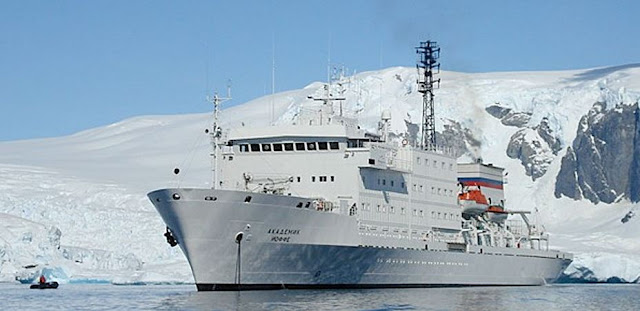
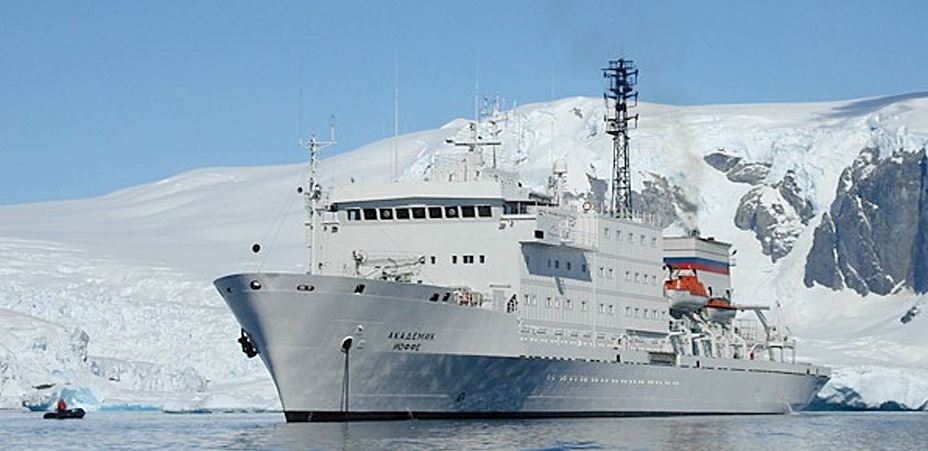
Grounding of expeditionary ship in the Arctic evokes memories but no worries

Grounding of expeditionary ship in the Arctic evokes memories but no worries


Sorry to hear that the Akademik Ioffe ran aground in the Arctic.
But the expeditionary cruise ship, on which I have sailed, has already been refloated.
The last time something like this happened, with the Clipper Adventurer back in 2010, we were on the ship, Sheena and I. It wasn't fun, obviously, but we were never in any real danger.
From what I have read, I don't believe the 160 or so people on the Ioffe are threatened in any way.
In 2010, our ship stayed grounded and we had to be rescued by the Canadian Coast Guard.
Given that the Ioffe has been refloated, and is reporting no hull breach, the ship will probably head to the nearest major port -- possibly Resolute.
A sister ship, the Akademik Sergey Vavilov, has been making its way to Kugaaruk, near where the ship slid onto a submerged shelf. It may already be there and taking on passengers from Ioffe.
Keep in mind that the Canadian Arctic is NOT like the Antarctic.
First, it is an archipelago of islands, which means land is never very far away.
The worst case scenario in 2010 would have found us bundled up in our cold-weather gear and zooming ashore in zodiacs to await the arrival on land of the coast guard. As it happened, the sun was shining and we waited, most of us, lounging on the top deck.
Second consideration: as in this case, other vessels are always within rescue distance.
The other concern is environmental damage. But given that the ship is floating again -- probably after discharging fresh drinking water to reduce weight -- the chances of that appear to be minimal.
Adventure tourism involving expeditionary vessels of this modest size brings important benefits to people who live in the Arctic.


Read more »
Ken McGoogan
0 Comments
Rock band Rhonda and the Cries for Help sing John Rae at the Hall of Clestrain

Rock band Rhonda and the Cries for Help sing John Rae at the Hall of Clestrain


The trouble began when Fran Flett Hollinrake, aka the Queen of St. Magnus Cathedral, asked in all innocence, "When's the new album coming out?" We could see what she meant. Tom Muir, Rhonda Muir, Sheena Fraser McGoogan and I had not yet settled on a name for our emerging rock band. But the Beach Boys sprang to mind and would you believe it? they were singing Help Me, Rhonda. So we became Rhonda and the Cries for Help. The photo is by Orkney's own John Welburn, a leading member of the John Rae Society. And if you have read this far, I know you want to catch one of the Cries for Help talking John Rae to Orkney News, filmed by Fiona Grahame. All you have to do is click this link:  https://youtu.be/CBHroVUU_uU.


Read more »
Ken McGoogan
0 Comments
Searching for ancestors leads to gravesite madness

Searching for ancestors leads to gravesite madness


Twice before, we had located it, the gravesite of John McGugan -- Ground Zero, really, for a host of McGugans, McGougans, and McGoogans. We had made our way to the Kilchatten Cemetery on the tiny Scottish island of Gigha, three miles west off the coast of Kintyre.
The first time, roughly a decade ago,  I had ignored a Keep Out sign as not pertaining to me, climbed over a makeshift fence surrounding the ruined church and, on deciphering the word "Gugan," excitedly scraped away as much mud and overgrown grass as I could.
The second time, five or six years ago, conservators had cleaned up the mess and, as a sign says, "consolidated the church as a ruin." With the help of a gardener, who knew the stone as the oldest legible marker in the cemetery, I was able to get a better look. But the day was overcast and the light was terrible and we failed to get a decent photo.
Third time out, yesterday, we had a devil of a time locating the stone. We remembered roughly where it was, both Sheena and I, but the grass -- the flourishing grass is no friend of ours. Eventually, we found it. And so began our moment of gravesite madness, ripping and tearing at the grass, clearing away chunks and small strips of turf. Finally, we got the stone uncovered.
As you can see, it is very near the wall of the ruined church, which dates back to the 13th century. Archaeologists have determined that it was still in use in 1695, but was replaced by another in the early 1700s.
Nearby, there existed an old holy well dedicated to St. Cathan -- but its position "has now been lost." My madness, you see, is not without reason. This gravestone could easily disappear forever.
Variations on the McGugan name, one of the most common on Gigha, turn up on at least four legibly printed and much more impressive markers from the 19th and 20th centuries.
But on the Ground Zero stone, and this is what I love best about it, somebody scratched out the lettering by hand. Not only that, but the line-breaks are marvellously haphazard, dictated only by space considerations: "This is the bury// ing place of John Mc// Gugan tenant at Ardminish . . . "
Ardminish is the name of the only village on Gigha. There is more. Sheena says that it might come clear if we could take a decent rubbing . . . but of course we carried no pencil.
Fortunately, a few written records do mention John McGugan. But about those, I shall leave you in suspense.


So there we were in Kilchattan Cemetery on the Isle of Gigha, pulling out
-->
Read more »
Ken McGoogan
0 Comments
The Canadian Invasion of Scotland

The Canadian Invasion of Scotland


Canadian invasion forces have swept through the Dunfermline area north of Edinburgh, claiming Broomhall House.  This impressive mansion, located on a splendiferous, well-kept estate has been in the family of Robert the Bruce for more than 300 years. The Canadian connection comes via James Bruce, the eighth Earl of Elgin, who had his home here. In the late 1840s, as governor-general of Canada, he proved pivotal in introducing responsible government, a key step in Canada's emergence into independence. The taking of Broomhall House follows hard on earlier successes.  Canadians were able to claim Dalhousie Castle thanks to George Ramsay, the ninth Earl of Dalhousie, who spent more than a dozen years in Canada and established Dalhousie University in Halifax, modelling it after Edinburgh University. East of Edinburgh, the invaders claimed Ballencrief Castle, birthplace in 1721 of James Murray. He fathered the Quebec Act of 1774, which saved Canada from joining the rebel states in the American Revolution. The rebels judged it intolerable, this business of allowing French colonists to retain their language, laws, and religion. The Canadian invasion of central Scotland began in
Edinburgh with the taking of Abden House, where in 1862, Canadian politician George Brown met and fell in love with Anne Nelson. Their marriage proved transformative and enabled Brown to become a leading father of Confederation. Canadian forces had begun their all-inclusive campaign in Orkney at the Hall of Clestrain, birthplace of Arctic explorer John Rae, who joined the Hudson's Bay Company and discovered the final link in the first navigable Northwest Passage. In central Scotland, the taking of four landmark locations -- Broomhall, Dalhousie, Ballencrieff, and Abden -- suggests that the Canadian invaders will soon turn their attention to the Highlands.
.
Read more »
Ken McGoogan
0 Comments
Braving storms in search of John Rae

Braving storms in search of John Rae


-->
What was he thinking, explorer John Rae, when he built a stone house in the High Arctic? He hired local Inuit to use their dogs to bring him big rocks. This was at Repulse Bay in 1846 with winter coming on. He got the house finished, a big room for the men and, because he did not smoke, a smaller one for him. With temperatures plummeting, he named the place Fort Hope.
What was he thinking? He was thinking of home, of growing up in Orkney, of riding out from the Hall of Clestrain with his musket to hunt for hare, and for curlews and grouse and lapwing.  He was thinking of one place in particular, a stone-built house near his favourite hunting spot in the rolling hills, where because of the distance from home, roughly fifteen miles, he would sometimes ask and receive permission to stay overnight.
This afternoon, on Orkney's Mainland, four of us visited the ruins of that stone house: me and Sheena and historian Tom Muir, our sortie led by Andrew Appleby, president of the John Rae Society. The house is located at Cottascarth in the Harray district, directly behind the Eddie Balfour Hen Harrier Hide – a bird-watching sanctuary.
Rae would have seen many such houses, of course. But this was the one where, according to local lore, he stayed more than once. And, though we have no documentary evidence, this was almost certainly the one that sprang to his mind when he needed to build a shelter. The style of construction is identical.
During our visit, after an initial half-mile slog from where we parked, the rains came on. We clambered around regardless, snapped a few photos, and even made our way through the grass to a winding stream or burn. This was it: another house in which John Rae once slept.
At Fort Hope, in the Arctic darkness, Rae learned the meaning of Real Cold. But then he visited some Inuit in a snowhouse they had built. He realized: wait a minute! it’s far warmer in here. He converted on the spot and, nostalgia be damned, never built another stone house. Oh, and one thing more. Next spring, when the Arctic Return Expedition sets out to retrace Rae's route of 1854, the team will visit Fort Hope before striking westward.


Read more »
Ken McGoogan
0 Comments
John Rae Festival turns up a Franklin sailor and a tribute in stained glass

John Rae Festival turns up a Franklin sailor and a tribute in stained glass


Arctic aficionados should check out this excellent bit of work from the Orkney News about the John Rae Festival. Most are aware that a gorgeous reclining memorial statue to explorer John Rae is one of the highlights of any visit to St. Magnus Cathedral in Kirkwall. Here we see it with the witty and perceptive Fran Flett Hollinrake, the world’s leading authority on, and only full-time staffer at, the 12th-century cathedral. Most know, as well, that Rae is buried in the kirkyard behind the cathedral. Fewer know that the graveyard also contains a memorial to Thomas Work, an able seaman who sailed with John Franklin on the Erebus.
He is commemorated on a stone that marks the grave of his widow, Catherine Wishart. And here is another surprise, courtesy of Orcadian historian Tom Muir. Not far from St. Magnus, the Scottish Episcopal Church of St. Olaf contains a stained glass window dedicated to “the beloved memory of my husband Dr. John Rae, the Arctic explorer.” It was installed by his remarkable Canadian wife, Kate Rae.
Read more »
Ken McGoogan
0 Comments
Orkney delivers venue, book-buyers, and a letter about John Rae's last day

Orkney delivers venue, book-buyers, and a letter about John Rae's last day


Turns out that Orkney was more than ready for me. Wonderful venue, the Orkney Theatre in Kirkwall. Good-sized audience, well-informed. Excellent introduction by my friend Tom Muir. And all those books we brought? Sold every one. I talked about John Rae, the Hall of Clestrain restoration, the Arctic Return Expedition. Had several fun conversations. That special bottle of John Rae whisky I received here a few years back, one of only thirty, is steadily increasing in value. So that's cool.
Oh, and a woman gave me a copy of a letter that Kate Rae, the explorer's Canadian wife, wrote about Rae's last day.  The letter-giver was the great-great-granddaughter of the recipient. Readers of Fatal Passage will recall that I quote the wonderfully expressive Kate Rae near the end of the book.  She and her sister came to Orkney to see the Stromness native buried. From the Kirkwall Hotel, on July 29, 1893, Kate wrote to Major James Barnett of the 1st Orkney Volunteers Artillery.  She remarked on "the great love he had for these islands and the Orkney people, and the many happy years he passed here both in this youth and in maturer years . . . . He was so pleased you had written to remind him [of his previous generosity], and said how active you had always been both in volunteers and boating matters and he said what a good shot you were and he asked me to go myself and get the postal order [for a magazine subscription] and send it to you at once. I scarcely ever left his bedside, but I went at once and got the order and wrote the note beside him and had it posted. It was his last subscription to anything and it seemed to me most suitable for amongst his simple pleasures he loved his boat dearly."
Don't you love gifts like that?
Read more »
Ken McGoogan
0 Comments
Before turning mainly to books about arctic exploration and Canadian history, Ken McGoogan worked for two decades as a journalist at major dailies in Toronto, Calgary, and Montreal. He teaches creative nonfiction writing through the University of Toronto and in the MFA program at King’s College in Halifax. Ken served as chair of the Public Lending Right Commission, has written recently for Canada’s History, Canadian Geographic, and Maclean’s, and sails with Adventure Canada as a resource historian. Based in Toronto, he has given talks and presentations across Canada, from Dawson City to Dartmouth, and in places as different as Edinburgh, Melbourne, and Hobart.